Second opinion · MRI, CT, X-ray and ultrasound
An AI second opinion on your MRI — read from the images, not from the report
Your radiologist read the scan once. Read Your Scan reads the same images again from scratch, and never sees their report while doing it. Where the two readings agree, you can stop worrying. Where they differ is what to ask your doctor.
Free to upload and explain your report · $19 for the independent read · minutes, not weeks
- Name, IDs and dates stripped in your browser, before upload
- DICOM folder, hospital CD, NIfTI or a photo of an X-ray
- Your doctor opens the link without an account
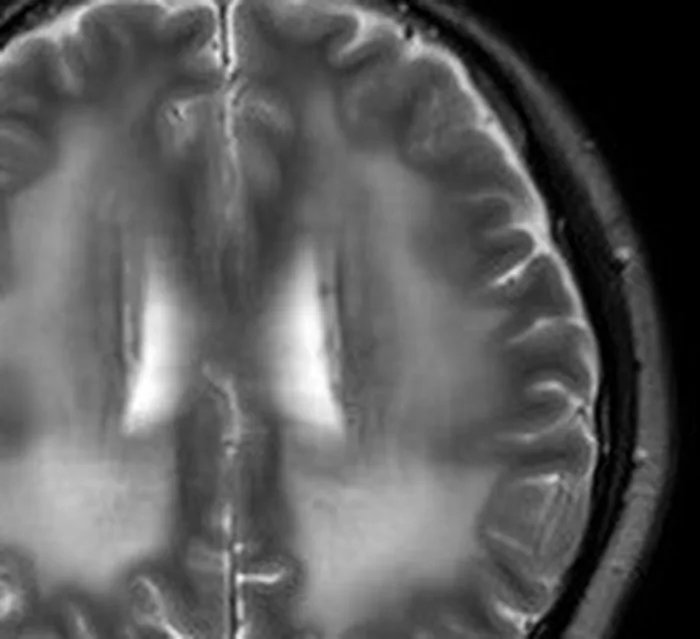
MRI · brainNormal
“Multiple T2-hyperintense foci in the periventricular white matter, of probable microvascular origin.”
→ A few small bright spots in the brain’s wiring, next to the fluid spaces. Very common with age — on their own, not a disease.
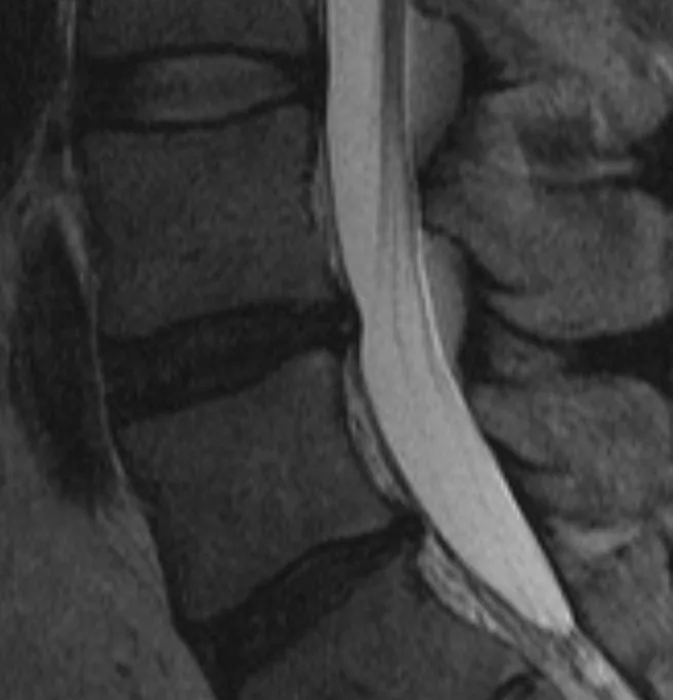
Broad-based disc bulge at L4–L5 with mild central canal narrowing.
Disc bulge L4–L5, mild central canal stenosis. No cord contact.
No significant foraminal stenosis.
Moderate narrowing of the right L5–S1 foramen, with the exiting nerve root abutted.
Vertebral body height and alignment are preserved.
Alignment preserved, no listhesis, vertebral body heights normal.
One question to take to your appointment
“The right L5–S1 foramen — my report calls it clear, the AI read calls it narrowed. Which is it?”
When a second read is worth $19
Not every scan needs one. These are the situations people actually come here with.
Your report is three lines and you have thirty questions
Radiology reports are written for the doctor who ordered them. A second read describes the same images in language you can use, and puts every finding on the picture it came from.
Surgery or an injection has been proposed
Before a decision that is hard to undo, it is reasonable to want the images looked at again — and to walk into the consultation with your own list of questions rather than the doctor’s.
Your symptoms do not match what the report describes
“Unremarkable” next to real pain is the single most common reason people go looking for a second opinion. An independent read tells you whether something was described differently, or not described at all.
The exam is old, from another hospital, or stuck on a CD
Those are the scans nobody ever looks at twice. Drop the disc in — the viewer opens it in the browser, and the read works the same on a five-year-old study.
The follow-up appointment is weeks away
You get the read in minutes. When the appointment finally comes, your doctor opens one link and sees the images and the findings together.
How the second read works
Three steps on one study page. You only pay at the third.
Step 1 · Free
Upload the exam
Drag in the DICOM folder, the hospital CD, a NIfTI file or a photo of an X-ray. Identifying tags — name, IDs, dates — are stripped from the files in your browser, before anything leaves your computer. Then the scan opens in a real 2D/3D viewer.
Step 2 · Free
Your radiologist’s report, mapped onto your images
Add the report as a PDF or a phone photo. Every finding in it is pulled out, explained in plain language, scored for severity and pinned to the place on your scan it refers to. You can also have a fast model read one series of your choice, free, so you can see what an AI reading looks like before you pay for one.
Step 3 · $19
The independent read
Deep Analysis reads every diagnostic series of the exam, slice by slice, with Anthropic’s Claude. It is never shown your radiologist’s report — that is the whole point, and it is what makes this a second reading instead of a rewording of the first.
Then
Compare them yourself
Both sets of findings live on the same study and land on the same images: step 2 is what your radiologist said, step 3 is what the AI saw on its own. Agreement is reassurance. A gap is a question — and you can ask it right there, on your own scan, as many times as you like.
What the $19 actually buys
One whole exam, not one screenshot.
Every diagnostic series, slice by slice
Not the one picture you happened to upload — the sequences a radiologist would actually look at, read through the volume.
Findings marked on your own images
Click a finding and the viewer jumps to it. You see the thing being described, in the place it was described.
Ranked by severity, in plain language
What matters is at the top, with a severity score, written to be read by you rather than by a referring physician.
A report you can print
A PDF to take to the appointment, or to send ahead of it.
Unlimited questions on your own scan
Ask anything about the exam. The answers stay tied to your study rather than to the internet.
A private link for your doctor
Images and findings together, no account needed on their side, revocable whenever you want.
Be clear about what this is
An AI second read is not a radiologist’s second opinion, and pretending otherwise would be the fastest way to be useless to you. Here is the honest version.
| This pageAI second read | A radiologistHuman second opinion | Your next appointmentAsk the doctor | |
|---|---|---|---|
| What it is | Software reads your images independently and explains what it sees | A licensed radiologist re-reads the exam and signs a new report | The doctor who ordered the scan re-reads or re-explains it |
| Cost | $19 per exam, one-off | Varies by country; usually paid out of pocket | Usually covered |
| How long | Minutes | Days to weeks | Whenever the slot is |
| Reads the images | Yes — every diagnostic series | Yes | Sometimes |
| Gives you a diagnosis | No. Informational only | Yes | Yes |
| Best for | Understanding your scan and arriving at your appointment with specific questions | A formal opinion you can act on medically | When you can wait, and the report already made sense |
If you need a diagnosis, you need a doctor. This is built to make that conversation better — not to replace it. Your radiologist’s report stays the authoritative one.
What it cannot do
The parts a page selling you something usually leaves out.
No doctor reviews the AI reading
Nobody signs it. It is an informational explanation of what is visible in your imaging, and it is not a medical diagnosis.
AI misses things, and calls things that are not there
Both happen. That is exactly why the reading is placed next to your radiologist’s and not on its own: two independent readings landing on the same finding is a far stronger signal than one confident-sounding report.
It only sees the pixels
No blood work, no history, no prior scans, no examination. Your doctor has all of that and the AI has none of it.
The model is named, and recorded
Deep Analysis is read by Anthropic’s Claude. The exact model version used is stored with every analysis, so what read your scan is always answerable after the fact.
Your scan stays yours
Identifying tags are removed in your browser before upload, share links are revocable, and you can delete a study — or the whole account — and the image files go with it.
Price
One exam
$19
Every series in the exam · findings on your images · printable report · unlimited questions
Three examsSave 21%
$45
$15 each. For the drawer of hospital CDs, a follow-up scan, or a parent’s exam as well as your own.
- One-off payment. No subscription, nothing to cancel.
- Credits never expire.
- If a reading fails to complete, the credit goes back to your balance automatically.
- The 3D viewer and your report explained are free, with no card.
Questions people ask before buying
- Is an AI second opinion a real second opinion?
- It is a real second reading of your images, and it is not a doctor. The exam is read again, independently, without ever being shown your radiologist’s report — so what comes back is genuinely another look rather than a rewording of the first one. But nobody licensed signs it, and it is not a diagnosis. If you need a formal second opinion you can act on medically, you need a radiologist; this is built to make that conversation better.
- Can I get a second opinion on an MRI online?
- Yes, in two forms. Teleradiology services will have a licensed radiologist re-read your exam and issue a signed report, usually over days and usually paid out of pocket. This page is the other form: an independent AI reading of the same images in minutes for $19, informational rather than diagnostic, designed to tell you what to ask about.
- How is this different from pasting my report into ChatGPT?
- A chatbot reads your report — the words someone else already wrote. This reads your images. Deep Analysis goes through every diagnostic series of the exam slice by slice, never sees the report, and marks each finding on the scan it came from. That is why it can disagree with your report at all: it is not working from it.
- What happens if the AI and my radiologist disagree?
- It is flagged rather than smoothed over, and it is a question, not a verdict. Take it to your doctor in exactly those terms: “this reading describes the right L5–S1 foramen as narrowed and my report does not — which is right?” A named, specific question is the most useful thing you can bring to a ten-minute appointment.
- Which scans work?
- MRI, CT, X-ray and ultrasound. Upload a DICOM folder, a hospital CD or DVD, a NIfTI file, or a JPG/PNG photo of an X-ray. Multi-series exams are read series by series; a plain radiograph is read as one image.
- How long does it take?
- Minutes for a typical exam. A large multi-series study takes longer because more series are read. You get an email when it is done, so you do not have to sit on the page.
- Do I need my radiologist’s report?
- No. The independent read never uses it, so Deep Analysis works on images alone. But if you do have it, add it — mapping and explaining it is free, and the comparison between the two readings is where most of the value is.
- Can I share it with my doctor?
- Yes. A private link opens the images and the findings together, with no account needed on their side, and you can revoke it at any time.
- Is my scan private?
- Identifying DICOM tags — name, IDs, dates — are stripped in your browser before anything is uploaded. Text burned into the image pixels is not removed automatically, so check your images before sharing widely; the intended route is the private link to your doctor. You can delete a study, or your whole account, and the image files are deleted with it.
- What does it cost?
- Opening your scan in the 3D viewer is free with no account. Uploading your radiologist’s report and having every finding explained, scored and mapped onto your images is free with an account. The independent AI reading of a whole exam is a one-off $19, or $45 for three exams ($15 each). No subscription, and credits never expire.
Have the images read again
Upload takes a minute, the viewer and your report explained cost nothing, and you decide about the independent read after you have seen how it works.
Informational, not a diagnosis · your scan is de-identified in your browser
Related
Read Your Scan provides informational explanations only — not a medical diagnosis, and not a substitute for a licensed radiologist or your doctor.